The Spectrum of Abstraction
Every tool in the history of software development has been an argument about the right level of abstraction. Assembly language was too close to the metal. High-level languages traded verbosity for readability. IDEs added graphical affordances on top of text. AI coding assistants layered natural language over syntax.
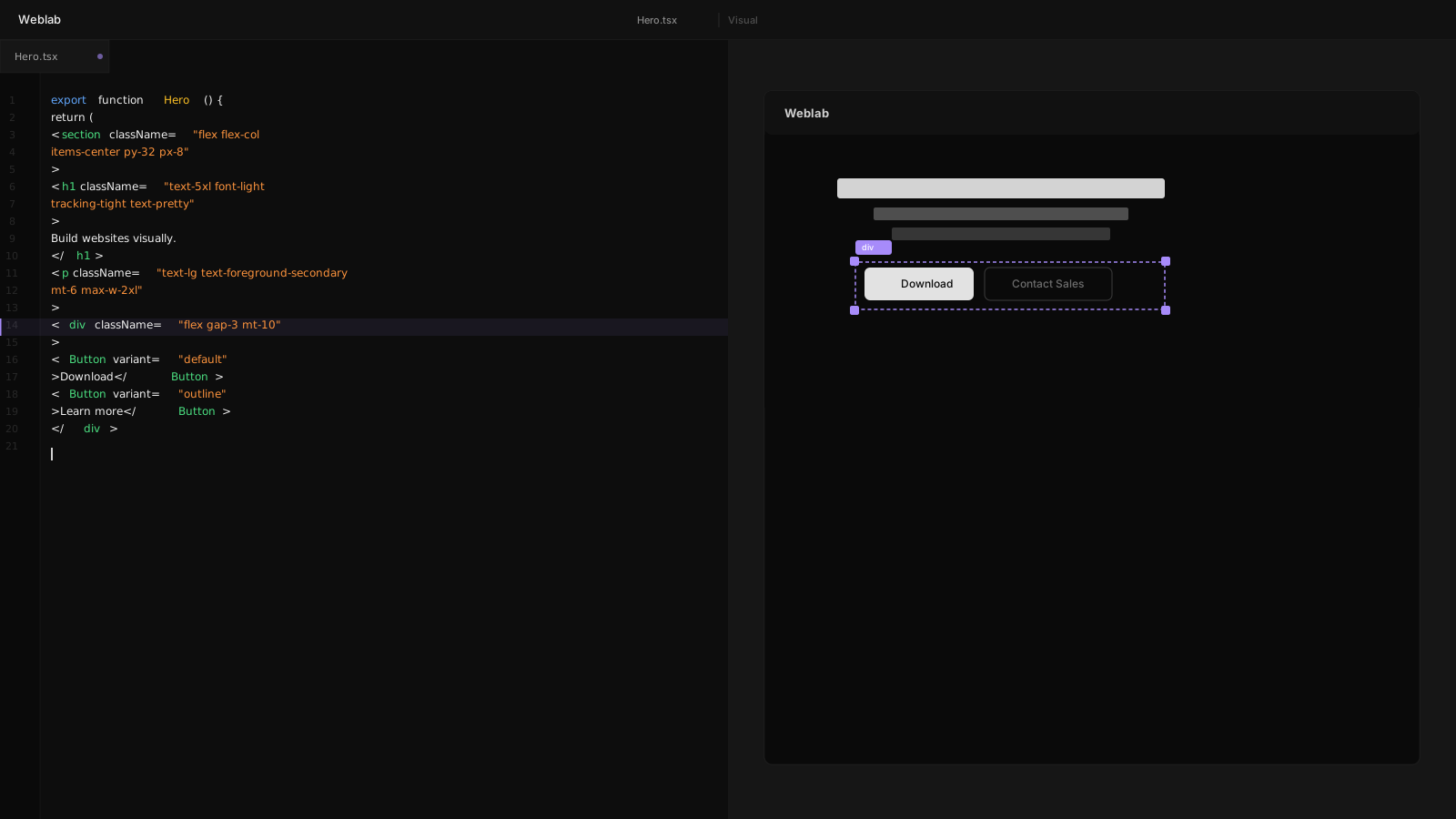
Visual-first development is not a radical departure from this trajectory. It is the next step: an environment where the primary interface is the rendered output, and the code is a derivation of that output rather than its precondition.
Why Now
Three conditions have aligned to make this shift possible today:
First, large language models can now translate visual specifications into precise, idiomatic code at low cost. The translation problem is largely solved.
Second, component-based architectures — React, Vue, Angular — have given visual editors a unit of composition that maps cleanly to UI primitives. You cannot visually edit raw HTML and CSS without producing chaos. You can visually edit a component tree.
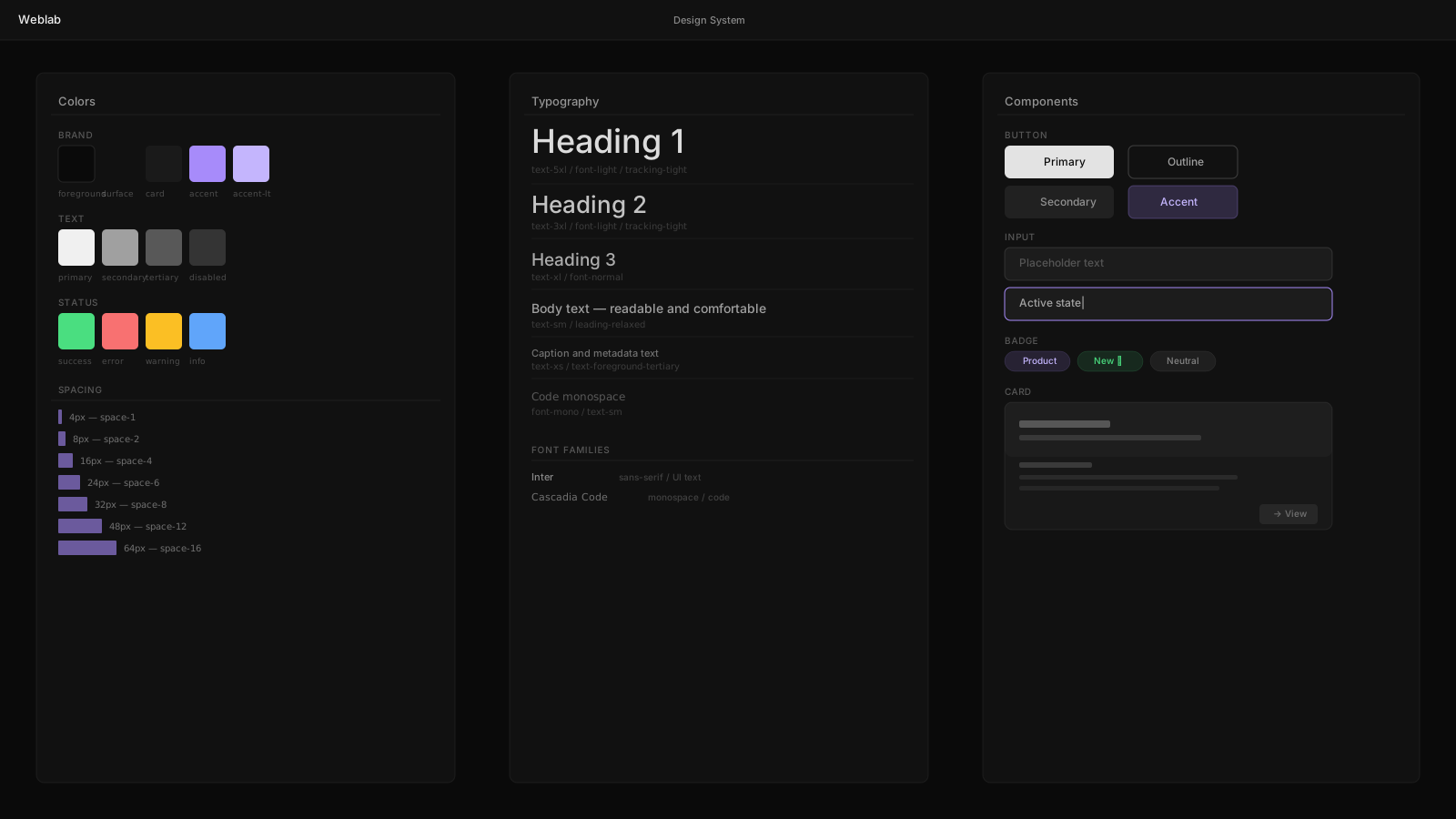
Third, design systems have matured. Most product teams now have a formal token library, a component catalog, and documented usage rules. This is the semantic layer that makes constrained visual editing possible.
What Visual-First Means in Practice
Visual-first does not mean code disappears. It means code stops being the primary surface through which most UI work happens.
The 80/20 of UI Work
Roughly 80% of UI work is iterative: adjust a margin, change a color, swap a layout pattern, try a different component variant. This work is tedious to do in code. It requires context-switching between editor, browser, and design file. The feedback loop is slow.
Visual-first tools compress this loop to near zero. You see the change as you make it. You commit when it looks right.
Code When It Matters
The remaining 20% of UI work is genuinely algorithmic: complex state machines, custom interactions, performance-sensitive rendering, accessibility logic. For this work, code is not just tolerated — it is the right tool. Visual-first tools should make it easy to drop into code exactly where it belongs.
The Role of AI
AI does not replace the visual-first paradigm — it amplifies it.
Generation vs Iteration
AI is best at generation: producing a first draft from a description. Humans are best at iteration: refining a draft toward a specific vision. Visual-first tools create the ideal environment for this collaboration. The AI generates; the human refines visually; the AI assists with the next step.
Constraint as Quality
Unconstrained AI produces unconstrained output. When AI has access to a design system, it produces on-brand output. The combination of visual editing and constrained AI is more powerful than either alone.
What Changes for Teams
Visual-first development does not eliminate specialization — it changes its shape.
Designers Who Ship
In a visual-first workflow, designers can produce deployable output directly. Not prototypes. Not specs. Actual PRs. This does not make designers into developers. It removes the translation layer that separated them.
Developers Who Curate
Developers in a visual-first workflow spend less time on pixel-pushing and more time on architecture, performance, and the complex 20% that requires code. The visual tool handles the rest, and the developer reviews the output.
Conclusion
The shift to visual-first development is a structural inevitability driven by AI, component architectures, and maturing design systems. The question is not whether the primary interface for UI work will be visual. It is which tools will be built well enough to earn that position.
We are building Weblab to answer that question.