The Speed-Quality Illusion
The conventional wisdom says speed and quality trade off. Move fast, break things. Slow down to do it right.
This trade-off is real when your tooling is bad. It becomes much less real when your tooling is good.
The question isn't whether to prioritize speed or quality. It's whether your tools let you have both.
What Slows Teams Down
Most slowdown in frontend development comes from three sources:
Context switching. Jumping between Figma, the code editor, the browser, and the terminal. Each switch costs minutes. The cumulative cost is hours per day.
Verification latency. Not knowing whether a change looks right until you refresh the browser, rebuild, and manually compare against the design.
Translation errors. Implementing something that doesn't match the intent because the spec was ambiguous and there was no way to ask in context.
How Weblab Addresses Each
Context Switching
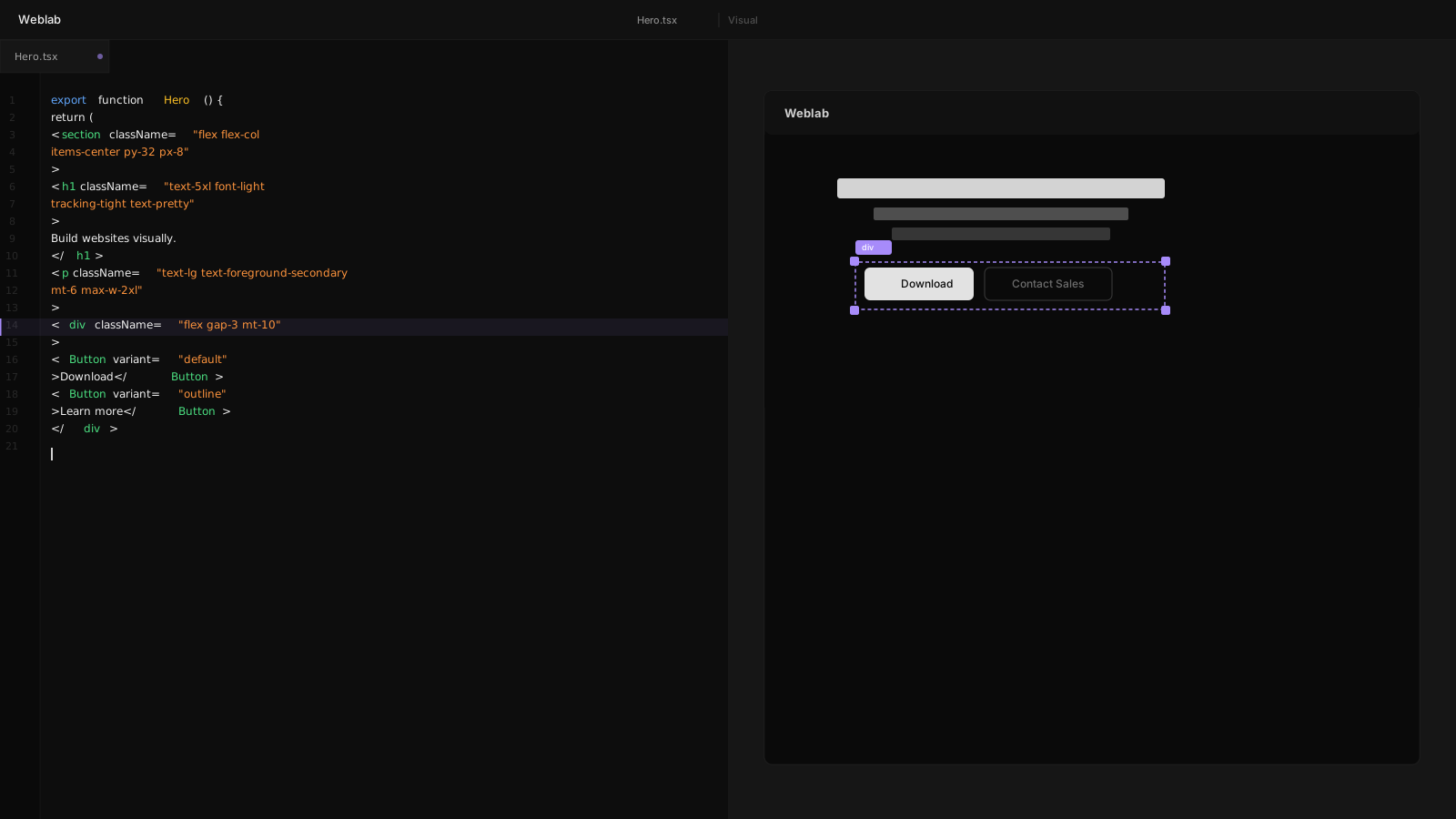
Weblab collapses the design-code-browser loop into one surface. You see the rendered output as you edit. You don't switch to a browser to verify — the canvas is the browser.
Verification Latency
Every change in Weblab is visible in real time. There is no refresh, no rebuild. The feedback loop is immediate. This doesn't just save time — it changes how you work. You make smaller, faster decisions because you can see the result of each one instantly.
Translation Errors
When the designer and the developer are working in the same tool on the same files, translation errors can't occur. There's nothing to translate. The designer's intent is expressed in the same medium as the developer's implementation.
The AI Layer
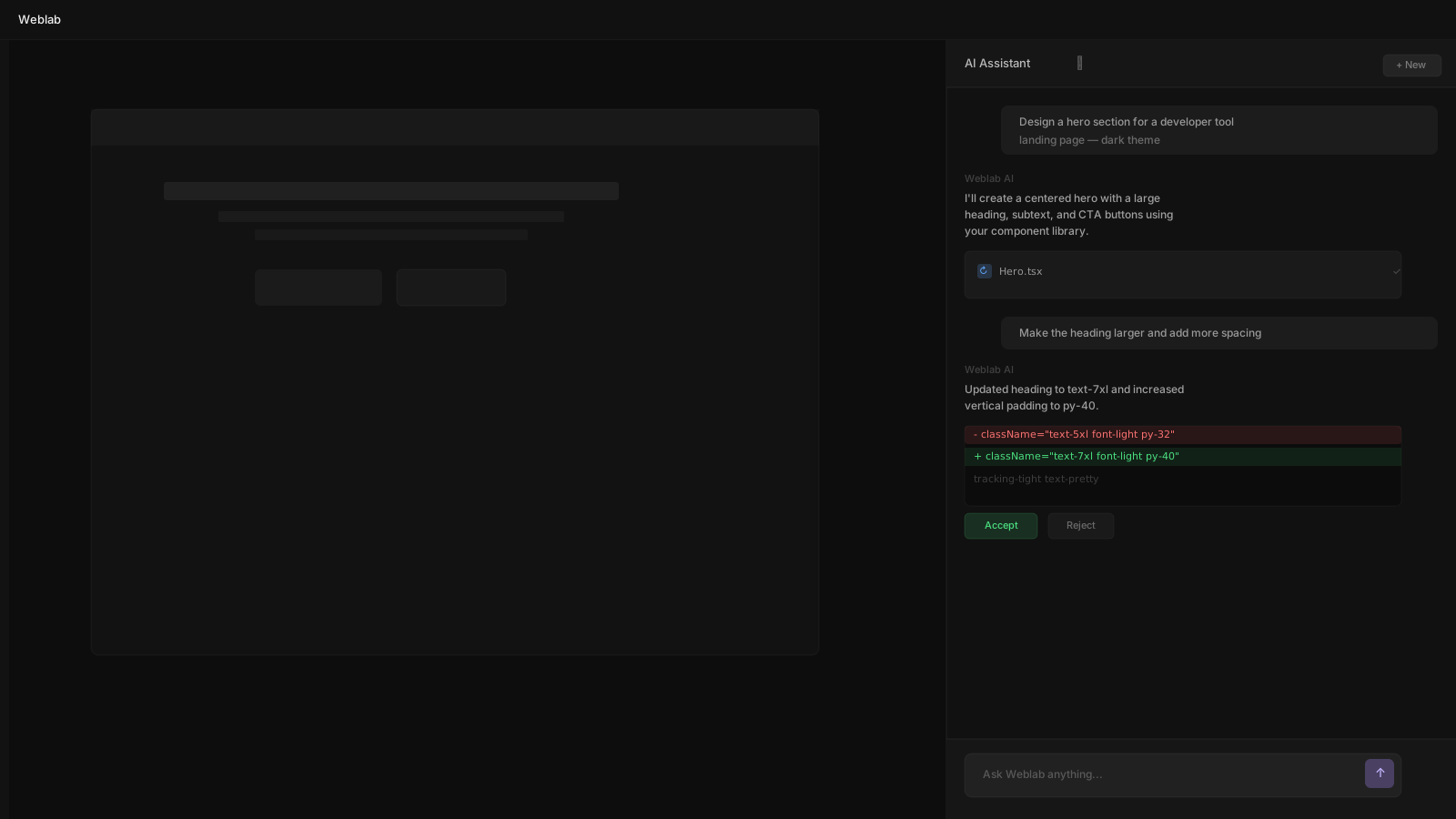
Weblab's AI accelerates the parts of UI development that are mechanical: generating layout variations, applying spacing adjustments, scaffolding new sections from a description.
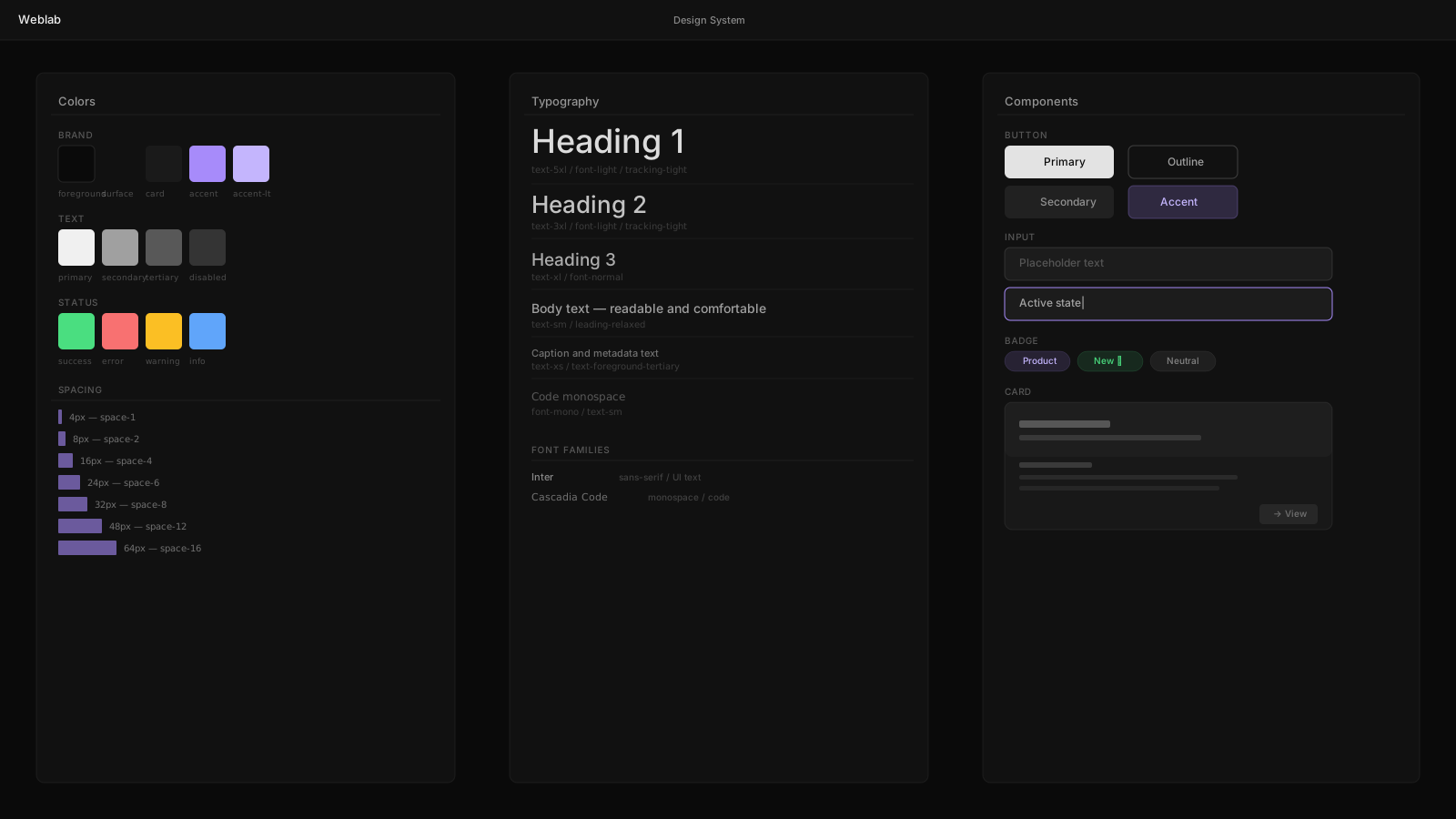
The key is that the AI operates within constraints. It uses your components, your tokens, your conventions. Fast AI output that violates your design system isn't fast — it's technical debt that moves the slowdown to code review.
Constrained AI gives you speed without the hidden cost.
What Shipping Daily Actually Requires
Teams that ship daily have two things in common: small changes and fast feedback.
Small changes are reviewable, testable, and reversible. Fast feedback means you know quickly whether a change is right.
Weblab enables both. Changes made on the canvas are minimal diffs — one class, one component, one prop. Feedback is instant in the canvas and fast in PR review.
The result is a rhythm: make a change, see it, commit it, ship it. Repeat.