Why Design Systems Fail
The pattern is consistent. A team builds a component library, documents it, publishes it. For six months, it works beautifully. Then the product grows, the team grows, and the system starts fraying.
New components get added without following the token convention. Old components accumulate className overrides that bypass the design logic. The documentation falls behind. Eventually the system becomes a collection of legacy constraints rather than a living tool.
The failure is always the same: the system was built as a product, not as infrastructure.
The Infrastructure Model
Infrastructure doesn't need to be perfect to be useful. It needs to be consistent, stable, and enforceable.
The teams that build design systems that scale treat their component library the same way they treat their API layer: with versioning, with contracts, with tests, and with enforcement at the point of consumption.
Token Contracts
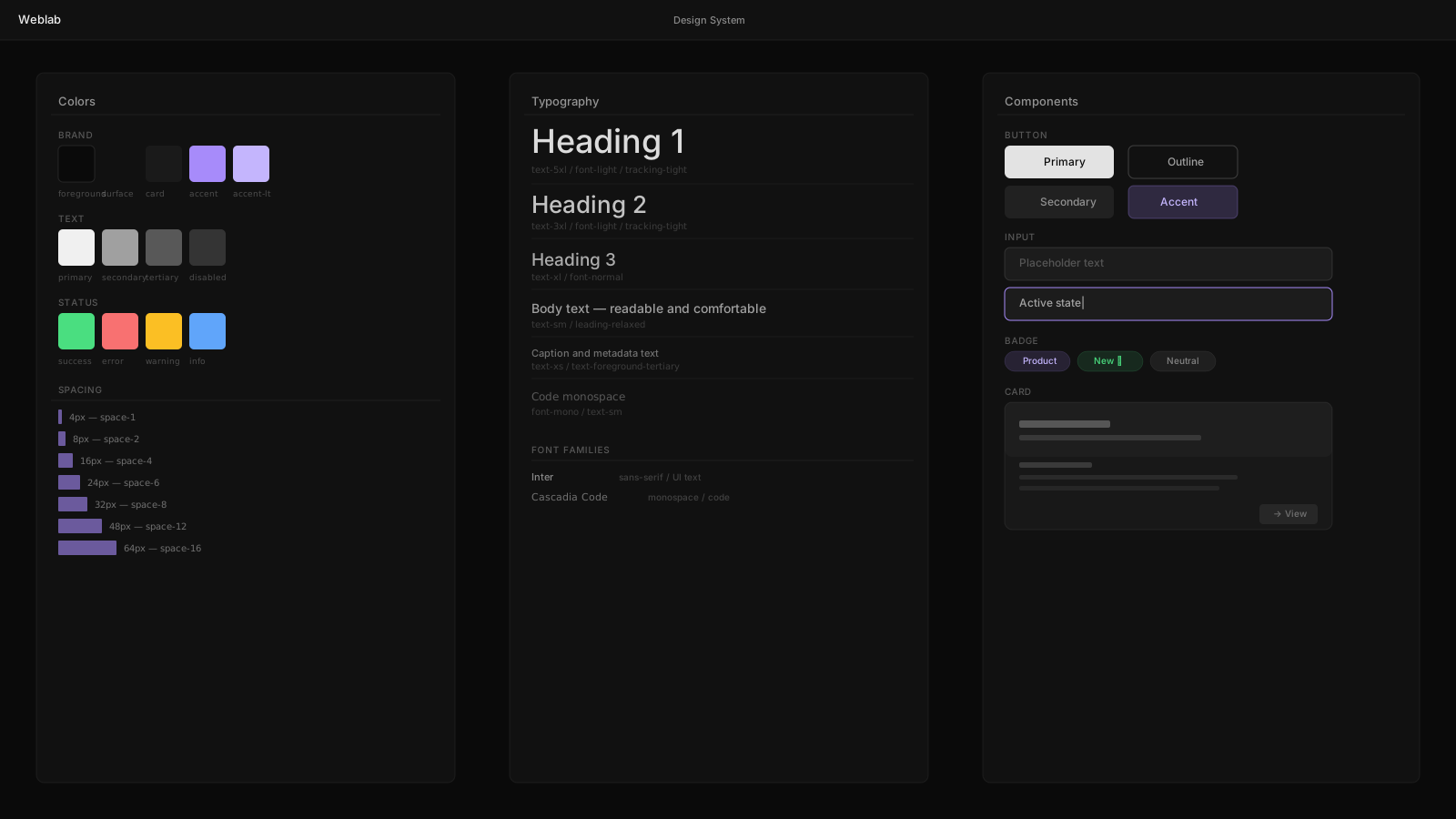
Every design decision that might need to change lives in a token. Color, spacing, typography, radius, shadow — all of it is named and referenced by name, never by value.
When a token changes, everything that references it updates automatically. This is not a new idea. It is consistently underimplemented.
Component Contracts
Each component has a defined API. The variant prop has a fixed set of values. The size prop has a fixed range. New values require a decision, not a workaround.
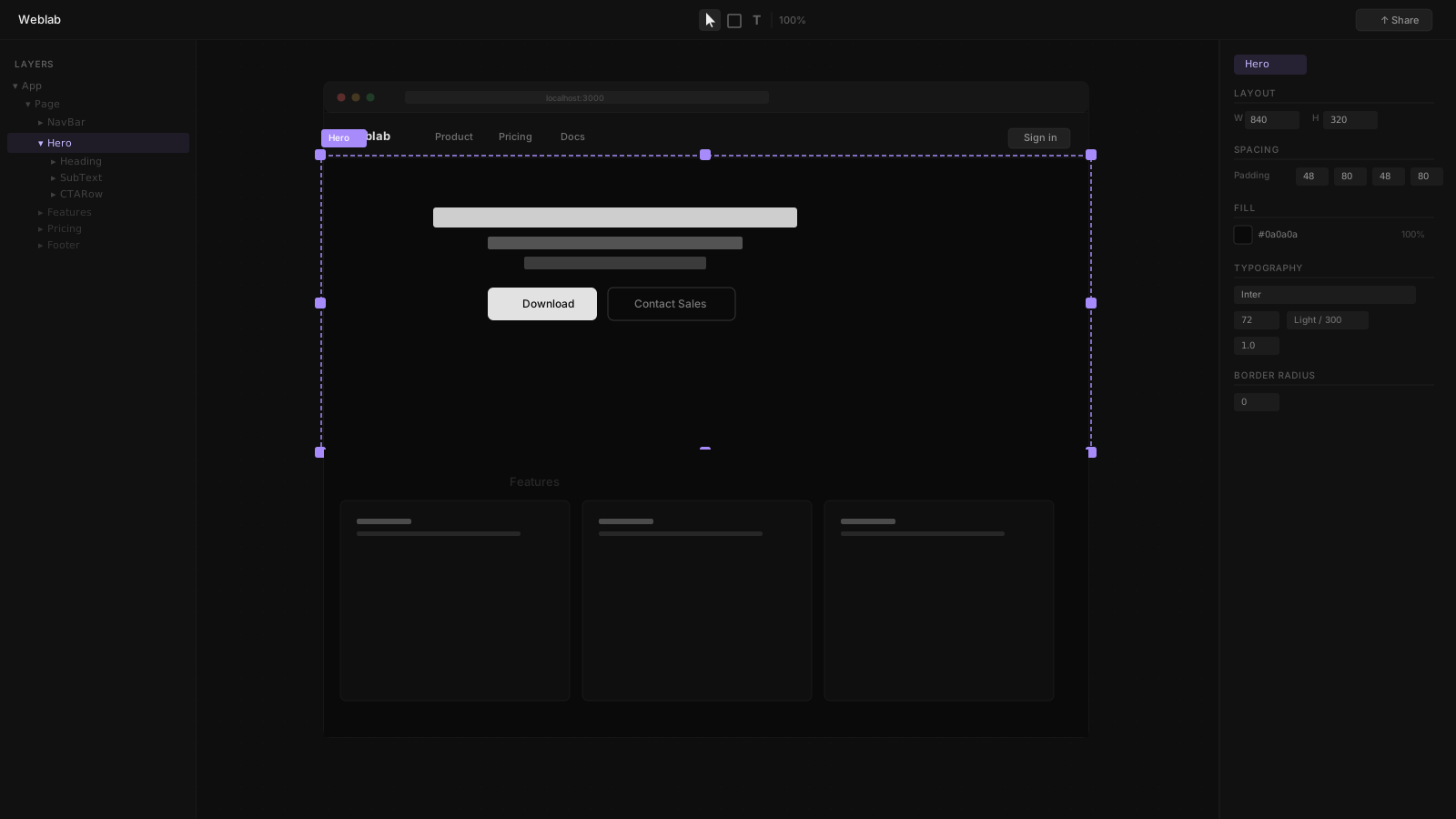
Weblab enforces this at the point of editing. When you select a component on the canvas, you see its API — not raw CSS. You can only set values that the component's contract allows.
Enforcement at the Point of Work
Documentation is not enforcement. Linting is partial enforcement. The best enforcement is a tool that makes the right thing easy and the wrong thing hard.
Weblab functions as enforcement. You cannot add a hardcoded color to a component through the canvas — you can only use design tokens. You cannot instantiate a component with a prop value outside its defined range.
This doesn't prevent all drift. But it prevents the casual drift that accounts for most design system erosion.
The Role of Governance
Governance is deciding who can change what, and how.
In a healthy design system, token changes go through a review process because they affect the entire system. Component API changes follow the same process.
When your design system lives in Git, governance is built in. PRs, reviews, approvals — the same infrastructure that governs your code governs your design system.
That's not a coincidence. It's the point.