The Problem with Design Files
Design files are opaque. A Figma file has no diff, no blame, no rollback. You cannot git log to see who changed the hero padding three weeks ago. You cannot revert a color system change that broke six screens without manually undoing each one.
This isn't a criticism of Figma — it's a fundamental limitation of proprietary binary formats. They were not built for the workflows that software engineering spent decades optimizing.
What Git Gives You
Git is infrastructure. It is version control, history, attribution, branching, merging, and code review — all in one system that every engineer already uses.
When a design change is a file change, it inherits all of this for free.
How Weblab Makes Design Git-Native
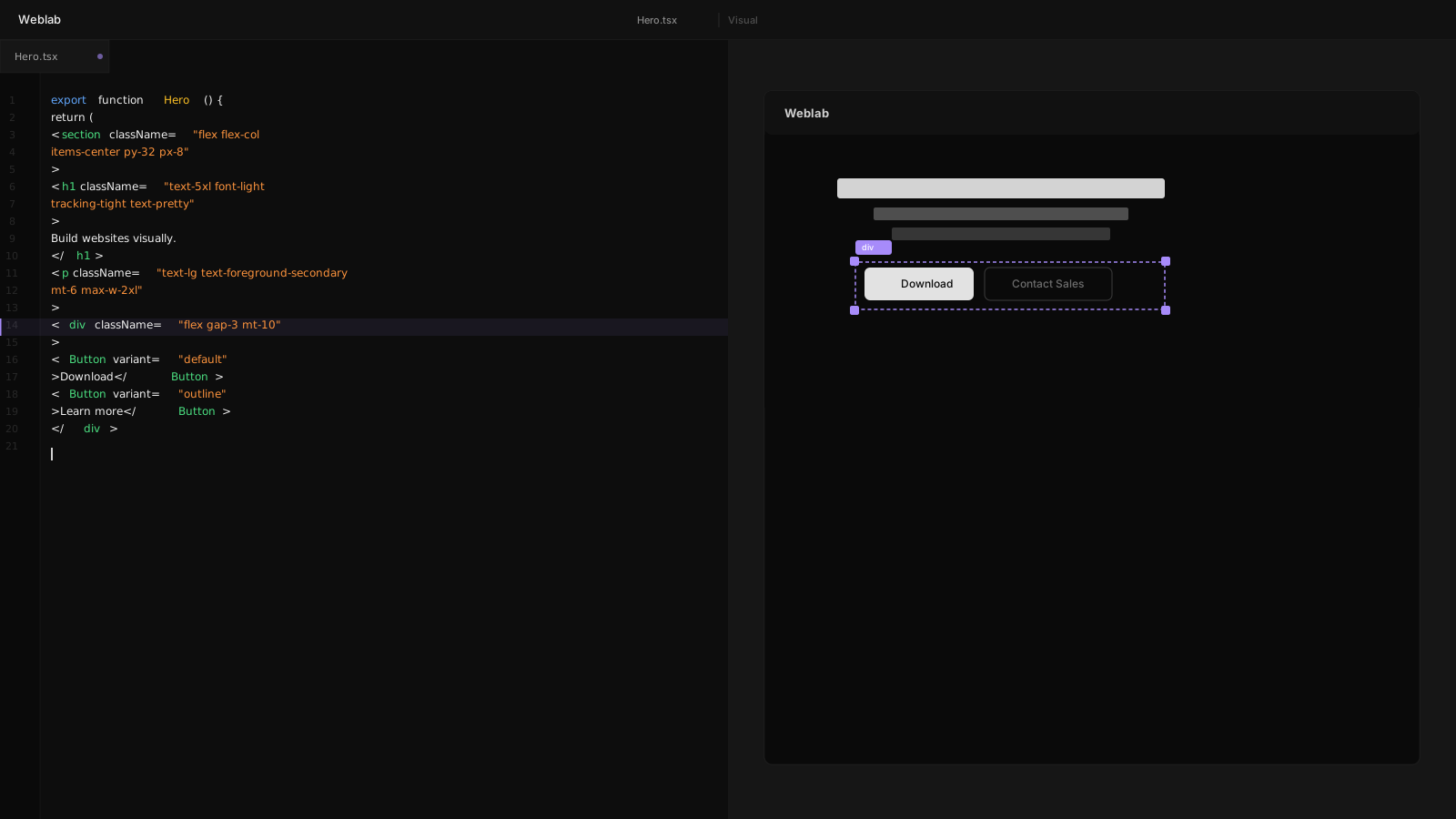
Every visual edit in Weblab produces a file change. Not a Figma snapshot. Not a proprietary diff. A real change to a real .tsx or .css file in your repository.
The Mechanics
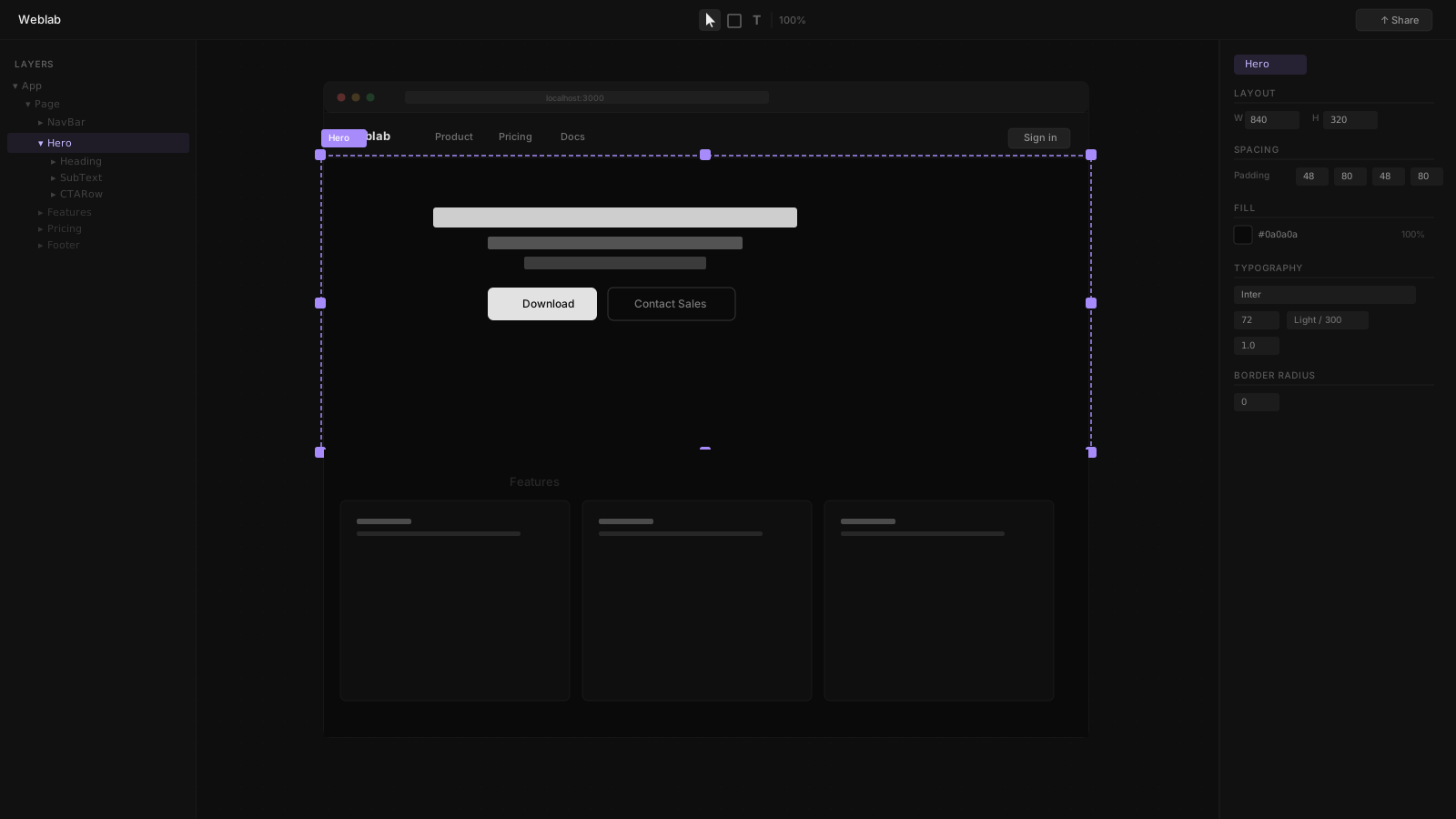
When a designer adjusts a button's padding in Weblab, the tool:
- Locates the exact AST node in the source file that corresponds to the
classNameprop - Applies the minimal change — modifying just the padding value, nothing else
- Writes the updated file to disk
The result is a file change indistinguishable from one a developer would write by hand. Your Git history stays clean. Your diffs stay legible.
A Real Example
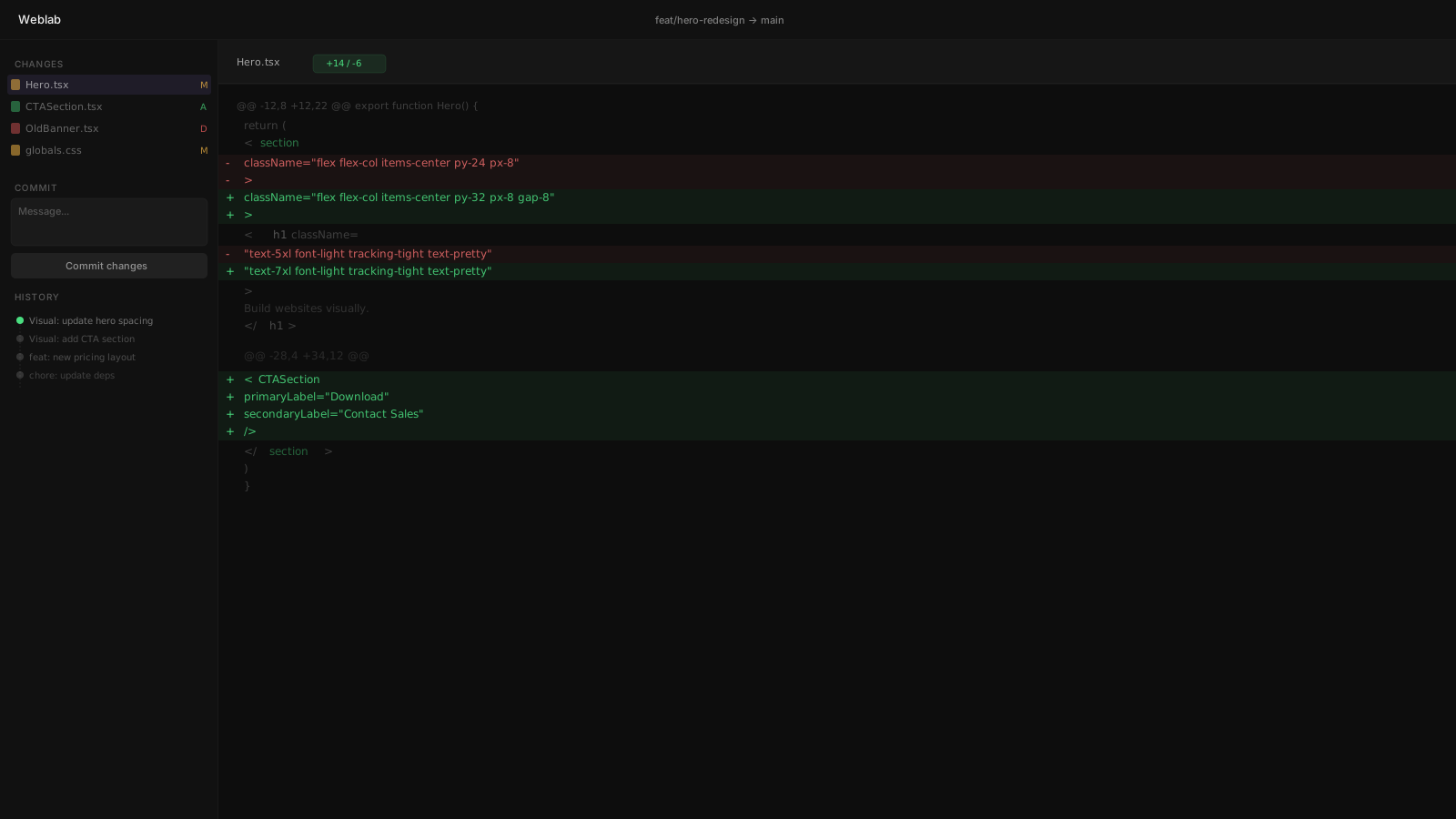
A designer changes a hero section's vertical padding from py-24 to py-32. The resulting diff:
- className="flex flex-col items-center py-24 px-8"
+ className="flex flex-col items-center py-32 px-8"
One line. Clear intent. Attributable. Reversible. Ready for review.
Compare that to the equivalent in a design tool: a pixel change in a prototype that has to be manually translated back into code by a developer who may or may not know which component the frame corresponds to.
The Review Workflow
Git-native design means the PR review process applies to design changes.
A developer reviewing a visual change sees exactly what changed — the Tailwind classes, the component structure, the token usage. They can comment inline, request changes, or approve. The designer gets the same feedback loop as a developer.
Branch Isolation
Design exploration lives on a branch. A designer can try a completely different hero layout on feat/hero-v2 without touching main. They can open a PR, get feedback, and merge — or discard — just like any other change.
This is not a metaphor. It is literal Git branching applied to design work.
The Institutional Memory Problem
Design decisions have reasons. Why is the nav 64px tall instead of 56px? Why does the card have a border-opacity-10 rather than border-opacity-15?
In a proprietary design tool, that context is lost. In Git, it's in the commit message. It's in the PR discussion. It's in the code comments.
Teams that use Weblab accumulate a design history that is searchable, auditable, and understandable — because it lives where all the other history lives.
Start Simple
You don't need to change your entire workflow to benefit from this. Start with a single feature branch where a designer makes changes in Weblab. Open a PR. See what the diff looks like. Notice that the review works exactly like a code review.
That's the whole thing. The rest follows naturally.