What Handoff Actually Is
Design handoff is the moment a designer says "I'm done" and a developer says "I'll take it from here." Between those two statements is a gap — a translation layer where information is lost, context evaporates, and fidelity erodes.
The industry has spent a decade building tools to make this gap more comfortable. Zeplin, Figma Dev Mode, Storybook integrations, design token pipelines. These are all optimizations of a fundamentally broken step.
The correct fix is to eliminate the step.
Why the Gap Exists
The gap exists because designers and developers work in different tools that produce incompatible artifacts.
Designers work in Figma. They produce frames, components, and prototypes — visual artifacts that describe intent.
Developers work in code editors. They produce React components, CSS classes, and TypeScript files — executable artifacts that implement intent.
The handoff is the translation between these two artifact types. Every translation loses something.
Closing the Gap
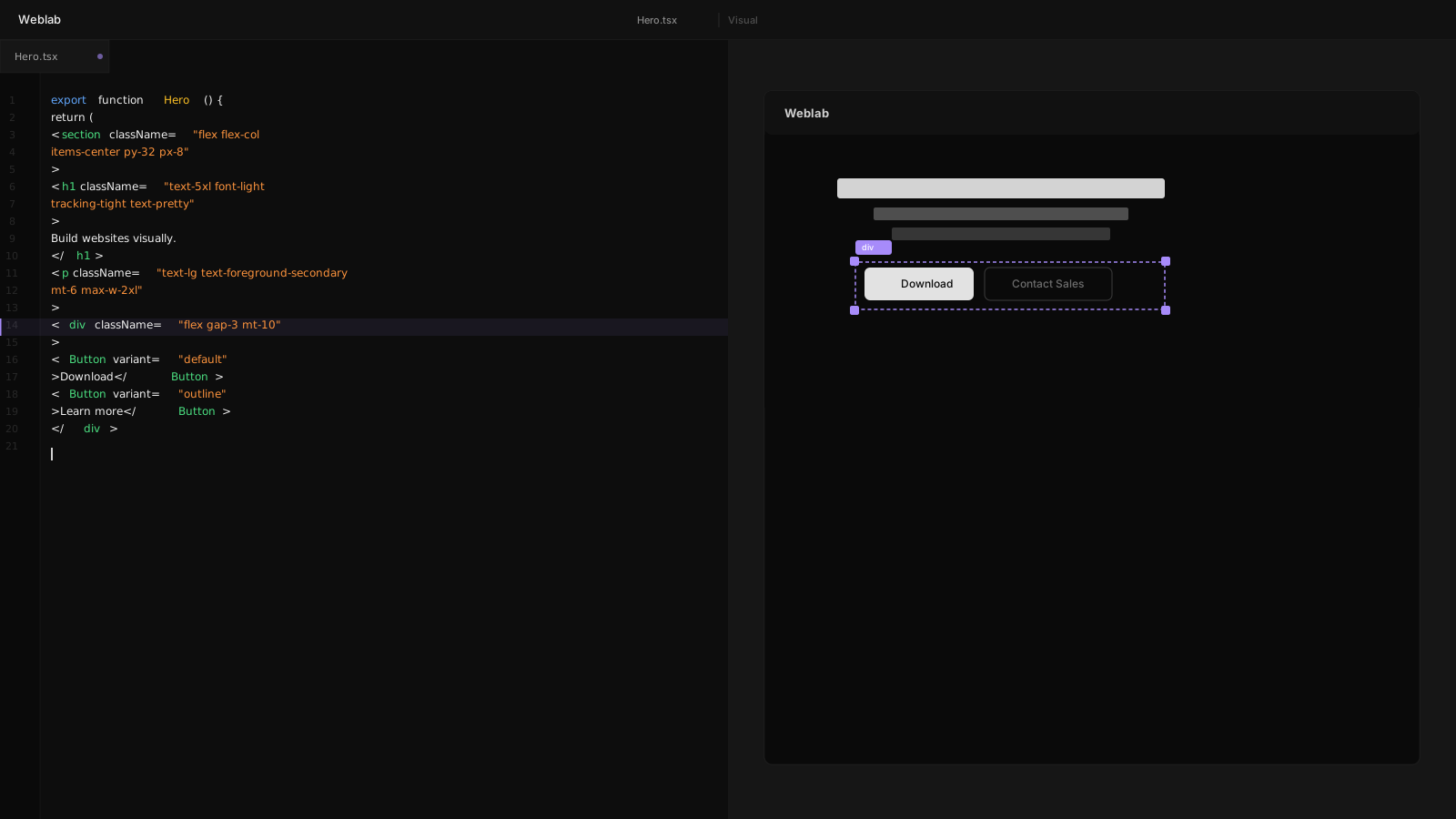
Weblab closes the gap by making code the shared artifact.
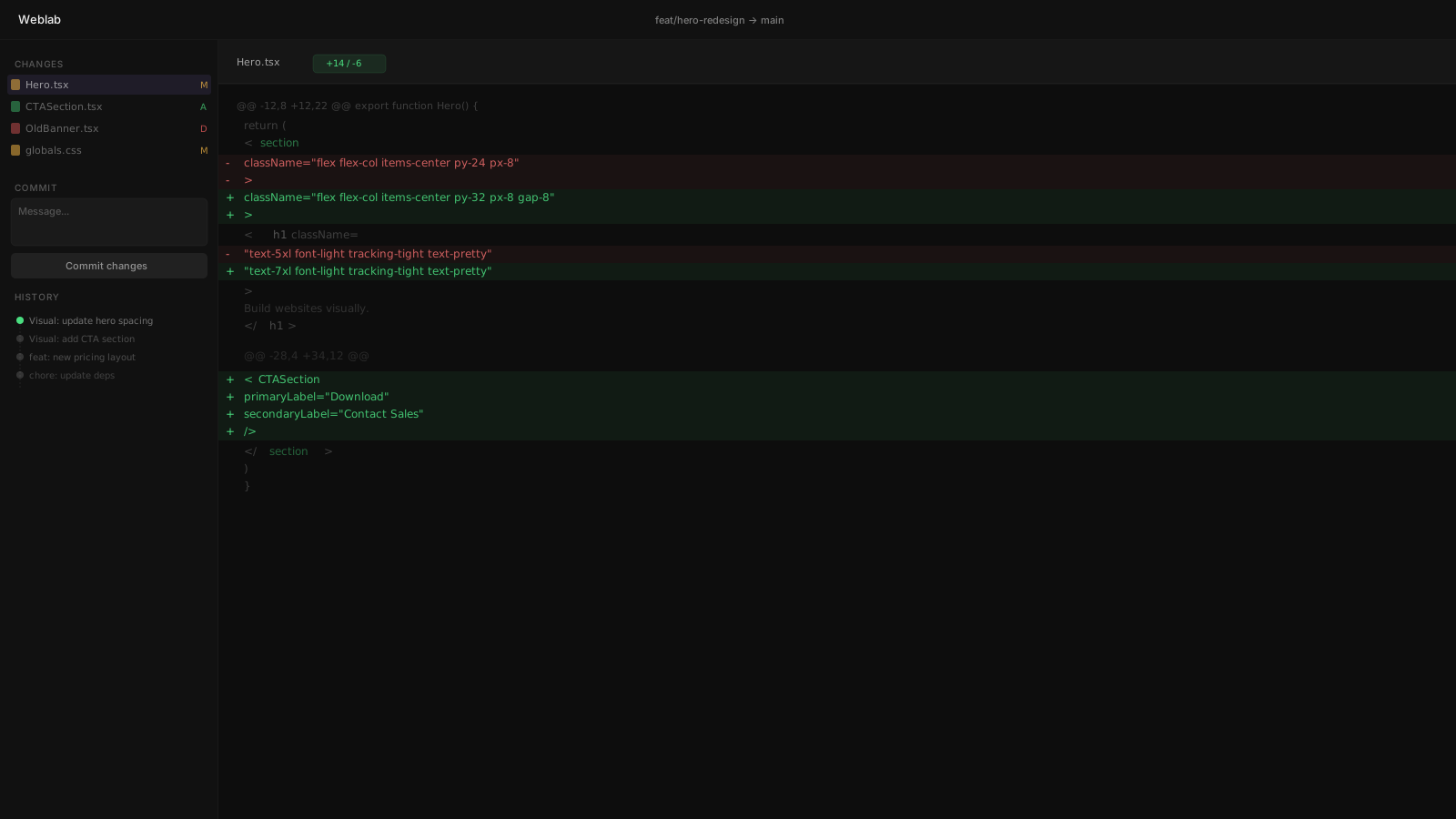
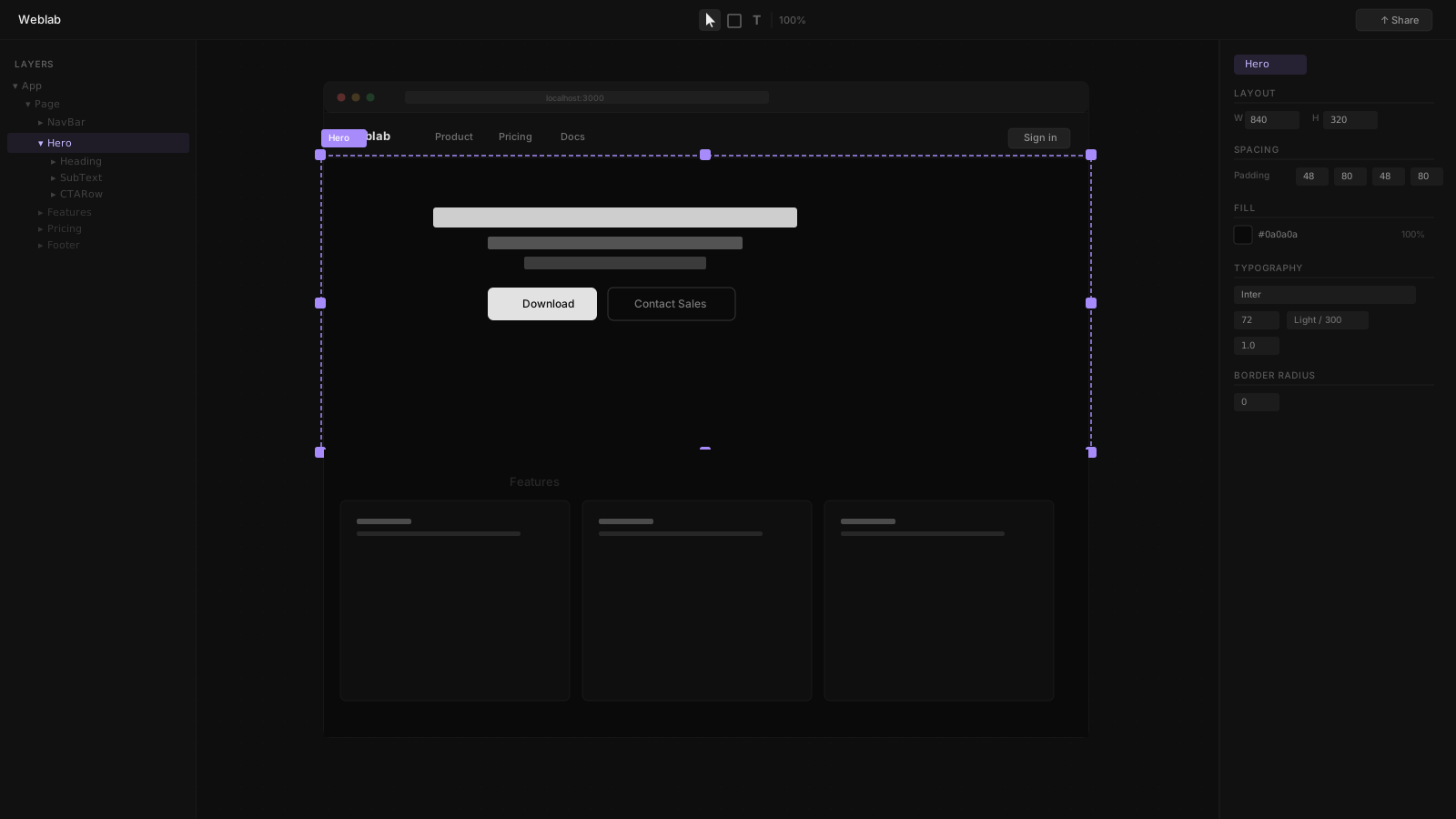
When a designer makes a change in Weblab, they're modifying a real source file. When a developer reviews that change, they're reviewing real code. There is no translation step because there are no incompatible artifact types.
The designer and the developer are working in the same repository, producing the same kind of artifacts, subject to the same review process.
What This Changes
The designer doesn't hand off. They open a PR.
The developer doesn't translate. They review.
The feedback loop that used to span days — design, hand off, implement, review, request changes, re-implement — compresses to hours.
The Cultural Shift
Eliminating handoff requires more than a tool change. It requires a shared understanding that UI work is collaborative by default, not sequential.
Designers need to be comfortable with Git. Developers need to be comfortable giving visual feedback. Both disciplines need to share ownership of the output.
The tools can enable this. They can't mandate it. That part is organizational.
But the teams that make the shift report something consistent: they ship faster, they ship with more confidence, and the output looks more like what was intended.
That's what closing the gap actually feels like.